
A Small Dental Clinic Runs Calm, On-Brand Waiting Room Screens With AI
Dental waiting rooms are where patients get nervous. This clinic wanted screens that calm people down and quietly explain what the clinic offers — without an agency retainer and without the same stock smile every competitor uses.
This is a composite story drawn from how small businesses actually use DigiOnGo. Details are typical rather than tied to one named client, and we don't quote invented statistics.
The business
A private dental clinic with three dentists, a hygienist and two receptionists, in a ground-floor unit of a residential building. Two treatment rooms, one waiting area with about ten seats. Patients wait on average fifteen to twenty minutes; children's appointments are a growing part of the schedule.
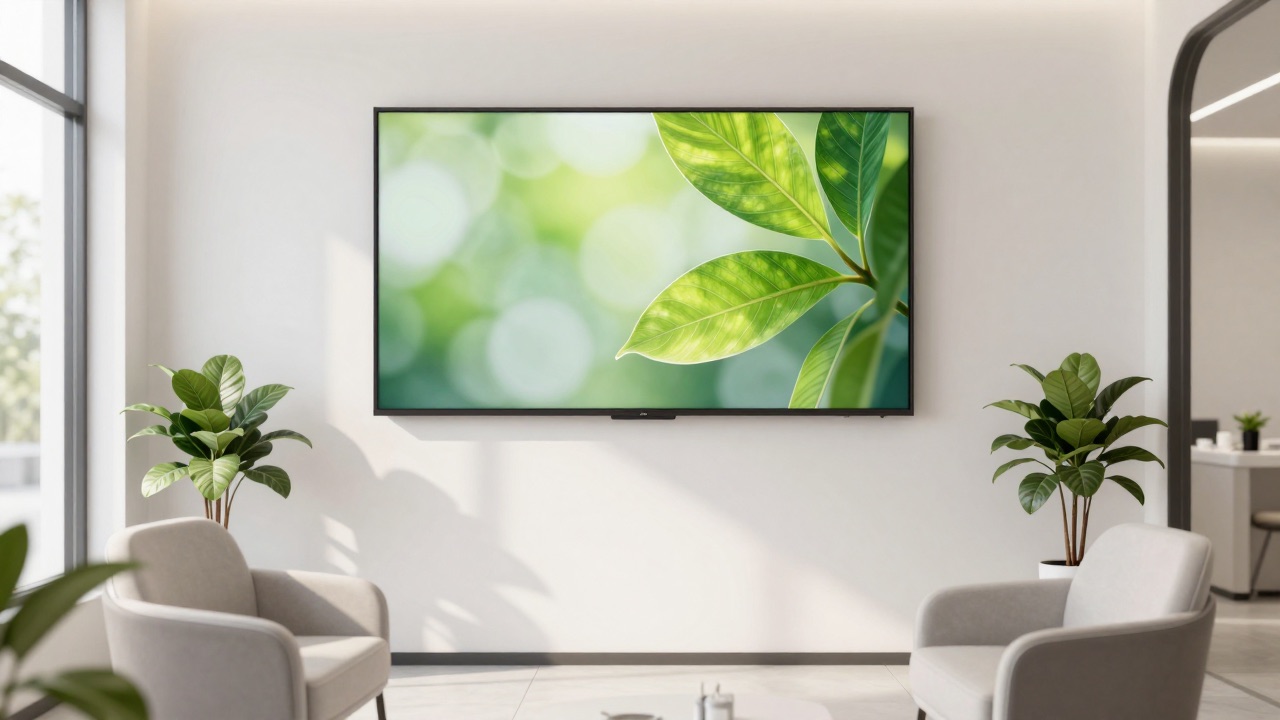
Two screens: a 50-inch TV in the waiting area and a smaller display at reception. Both ran DigiOnGo already, but the waiting-room screen had been playing muted TV news for a year because nobody had produced anything better.
The problem: content is a sensitive thing in healthcare
The clinic's manager knew what she didn't want: graphic close-ups of teeth, stock photos of models with impossibly white smiles, and anything that looked like an advertisement shouting at people who are already anxious. What she wanted was harder to describe — calm, warm, trustworthy, and specific to the clinic's services: hygiene, whitening, children's dentistry, implants.
An agency proposal for a "waiting room content package" cost about as much as a month of one dentist's salary and delivered twelve slides that would be reused indefinitely. Stock photo sites gave her the same three smiling families every dental site uses. The receptionists tried making slides in a design tool; the results were accurate and looked like office printouts.
What they tried before
- Muted TV news — calming for nobody, and occasionally showing things you don't want a nervous child to see.
- Stock dental photos — instantly recognisable as stock, and identical to competitors' websites.
- An agency package — expensive, static, and generic once you look closely.
- Receptionist-made slides — correct information, no visual warmth.
The waiting-room screen ended up as the least considered surface in a clinic that otherwise cares a great deal about atmosphere: soft lighting, plants, a good coffee machine — and a TV showing traffic news.
How it works now
With the AI Image Generator in the DigiOnGo dashboard, the manager builds the waiting-room content herself, one topic at a time. The screen now runs a slow loop: calm visuals with short, factual captions about the clinic's services, and a separate morning block for children's appointments.
Describe the feeling first
Every prompt starts with the mood — "calm", "soft daylight", "natural materials" — and only then the subject. This alone removed the "advert" look that stock photos brought in.
Avoid the clinical close-up
Instead of teeth, the prompts describe context: a person relaxed in a chair, a child with a toy, green leaves, water, morning light. The dental subject is carried by the caption, not the picture.
Generate 16:9, file by topic
One folder per service — Hygiene, Whitening, Kids, Implants — so the loop can be rebalanced by season (kids in September, whitening before summer) without regenerating anything.
Caption in the playlist, review once
Captions are short factual sentences added as overlays and checked by one of the dentists. Because the text is separate from the image, a wording change never means a new image.
Prompts they actually use
The manager's prompts are longer than a café's — the mood matters more than the object. Three from the current loop:
“Calm modern dental clinic waiting area, soft natural daylight, light wood and white walls, green plants, a person reading comfortably in a chair, peaceful atmosphere, no medical instruments”
Opening slide of the loop with the caption "Welcome. We'll see you shortly."
“Close-up of fresh green leaves with morning dew, soft light, shallow depth of field, clean and fresh feeling, minimal background”
Background for the hygiene and check-up slides — fresh without being clinical.
“Cheerful child holding a plush toy, sitting in a bright friendly room with pastel colours, soft light, warm and safe atmosphere, illustration style”
The children's dentistry block that runs in the mornings, when most kids' appointments are booked.
The routine
The loop is rebuilt about once a quarter, when the clinic's focus shifts — school check-ups in autumn, whitening in late spring. Rebuilding means generating five to eight new images in one sitting and rewriting the captions with a dentist over coffee. Roughly an hour, once a quarter.
Between rebuilds, single slides change when something happens: a new hygienist, a holiday schedule, a vaccination-week reminder for the paediatric side. Each of those is one prompt and one overlay.
What changed
A clinic won't publish patient-anxiety metrics, and we won't invent them. What the team reports is about the room and the conversations in it.
| Before | Now |
|---|---|
| Muted TV news on the waiting-room screen for a year. | A slow, calm loop of visuals and short service captions the clinic actually chose. |
| Stock photos indistinguishable from competitors' websites. | Visuals that match the clinic's interior and tone — light wood, plants, daylight. |
| Content decisions delayed because they needed an agency and a budget. | The manager updates the loop herself; a dentist reviews captions once a quarter. |
| Children's appointments with nothing on screen for children. | A morning kids' block with friendly illustration-style visuals. |
Tips that came out of it
- Lead with mood words. "Calm", "soft daylight", "natural materials" before the subject changes everything.
- Say "no medical instruments". The model otherwise likes to add them to anything with "clinic" in it.
- Use "illustration style" for children's content — it reads as friendly rather than clinical.
- Keep all medical facts in the caption overlay, reviewed by a clinician, never in the image.
- Organise folders by service, then rebalance the loop by season instead of regenerating.
Where it doesn't help
Anything that must be medically precise. A generated image is atmosphere, not documentation — the clinic never uses generated visuals to depict procedures, before/after results or specific products.
Real faces of real staff. The "meet the team" slide is a real photo taken with a phone in the waiting room. Generated images are for mood and context, and are labelled as such internally.
Give your waiting room something better than the news
AI Image Generator is part of every DigiOnGo plan. Generate a calm opening slide for your waiting room today — it takes about a minute.
Related Articles
How a Small Coffee Shop Makes Its Own Screen Ads With AI
A 30-seat coffee shop with no designer keeps its menu screen and window display fresh every week — prompts, routine, and what actually changed.
A Two-Chair Barbershop Fills Its Window Screen With AI Visuals
A two-chair barbershop replaced a static window poster with a vertical screen — and fills it with AI-generated visuals for services, promos and slow-hour offers.
A Flower Shop Keeps Its Window Screen in Season With AI Visuals
A one-owner flower shop with weekly-changing stock keeps its window screen in season with AI-generated bouquets, holiday promos and delivery reminders.